-
LTR064ganavyalet’s go out and play (london)2026
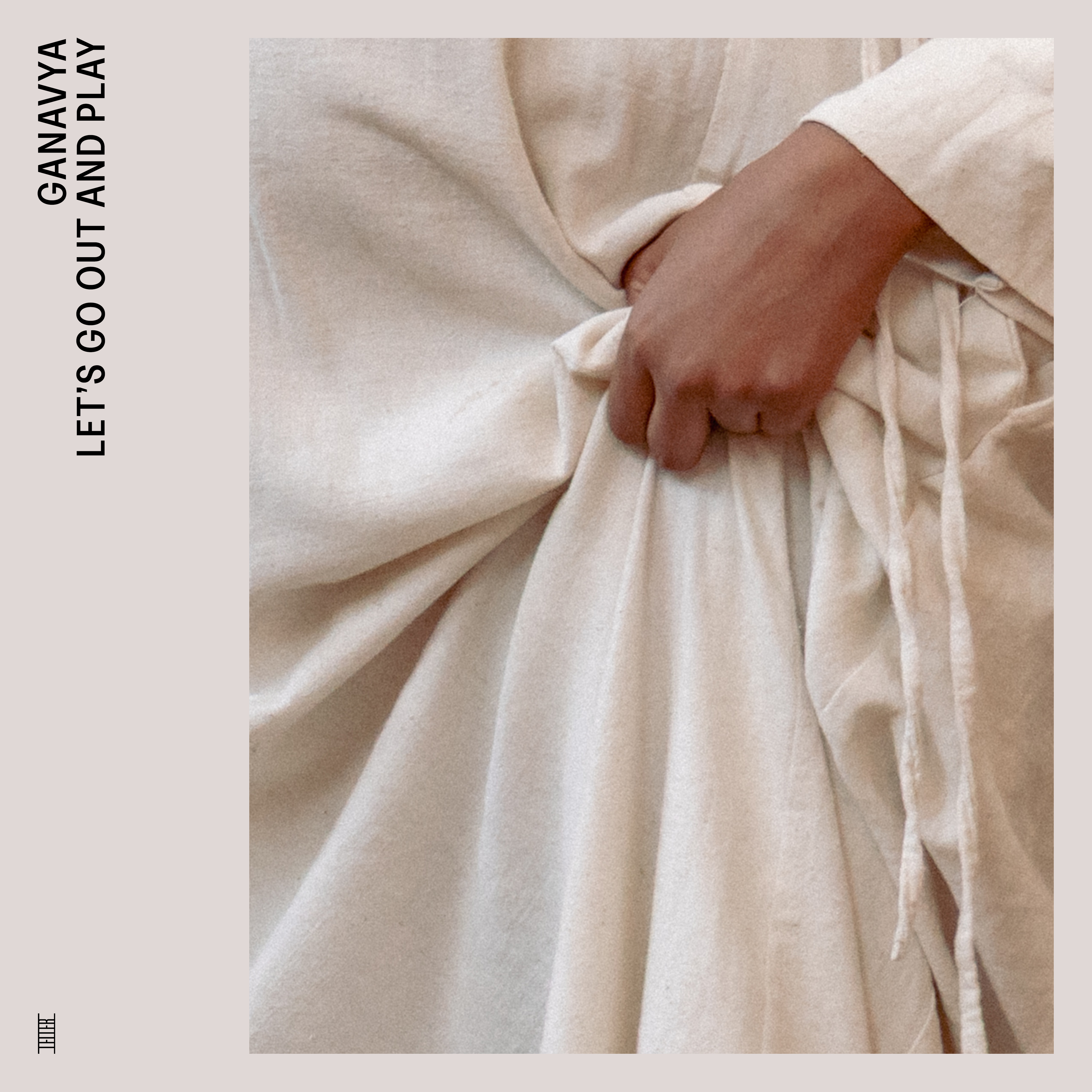
Singer, multi-instrumentalist and poet ganavya returns with a new live recording, captured at Love Supreme Projects in London and set for release on all digital platforms on July 17 via LEITER. Joined by harpist Charles Overton, double bassist Max Ridley, guitarist Shahzad Ismaily and a chorus of audience voices, she transforms a song first written in childhood and rediscovered years later during a period of profound solitude into a practice of community, vulnerability and shared breath.
Treating performance as an act of collective presence rather than spectacle, ganavya invites her audience to do something disarmingly simple: play. What begins as an intimate reflection on longing becomes a shared offering, with the song finding its fullest expression in the company of others. Recorded in one of ganavya’s most cherished performance spaces, ‘let’s go out and play (london)‘ is less a document of a concert than an invitation to lend one’s own voice, breath and awareness to the music.
I can’t remember when I wrote the song, but it was a long time ago. Every time we perform it live, I preface it with somewhat of a giggle: “now, we’re about to sing a nursery rhyme you’ve never heard before, because, well, I wrote it.” And eventually, I giggle again: “I feel like I have to give a disclaimer, that my family does love me, and my parents certainly do try — they aren’t terrible people.” People usually laugh. I’m not sure why; it might just be how I say it more than what I say, that it’s a trained response. But this strange, simple, old song of mine that I wrote as a child seems to do something every time we sing it. I’ve seen people sob, I’ve seen people laugh uproariously. And by people, I include myself.
The song opens simply: “I asked my mother to play, I asked my mother to play; and this she said to me, I love you, but not today.” Few songs have I gotten into the habit of steeling myself for reactions, but for reasons I don’t know yet, this song — not because of showmanship, not because it is technically impressive — but perhaps I return to becoming the child who wrote it when I sing it, always breaks something during the show. I’ve never recorded a studio version of it that felt like it could be released.
I’m six months pregnant as we record this, likely closer to seven while we release this. My husband and I have kept the pregnancy as quiet as possible, as one can while touring with an obvious human growing in your stomach, and there is a word that has become dear to both of us while we look at the future together: the Tamil word uyir. It is difficult to translate this word to English, but loosely, uyir would be something of life-breath, life-force, that which brings life into everything: it is the life behind every life, the breath that makes us a living thing. In Tamil alphabets, we have consonants, called mei-ezhuthu, or letters of the body, which largely remain un-animated and closed, until they are met with uyir-ezhuthukkal, or vowels, which are the letters of life breath. I have nothing profound to say, except that the audience, the listeners, you have always been part of our uyir-ezhuthukkal. You are part of the life-breath that breathes through our forms, our existences, and it is with you that the songs become fully alive to the world. It makes sense, then, that the song would be released from a live recording — could we call it an alive recording? — because it isn’t my closeness to punch or vocal perfection that matters, but your presence.
Of all the places, large and small, that I have performed, Love Supreme Projects on Golborne Road in London remains one of the most special. About six years ago, I moved into the mountains of Tygh Valley and lived in a large wooden chapel, going for days — sometimes weeks — without seeing anyone. The time I spent practicing and singing to myself changed the course of my life and voice, and it was in this chapel that I remembered this old song of mine. Every time I have walked into Love Supreme Projects — another chapel with vaulted ceilings and wooden floors — I remember that opening of the sky. Uyir means wind, too. I would soon learn that running away to the mountains and living for yourself was not a long-term answer, either. Your voices, your presences, your wind, your breath. Uyir-mei, it is the principles collaborating together that makes life. Thank you for playing, like children, with us. Thank you for your life breath. For an offering so precious, I can only give you mine in return. Let’s go out and play.