-
LTR065Charles OvertonReflections2026
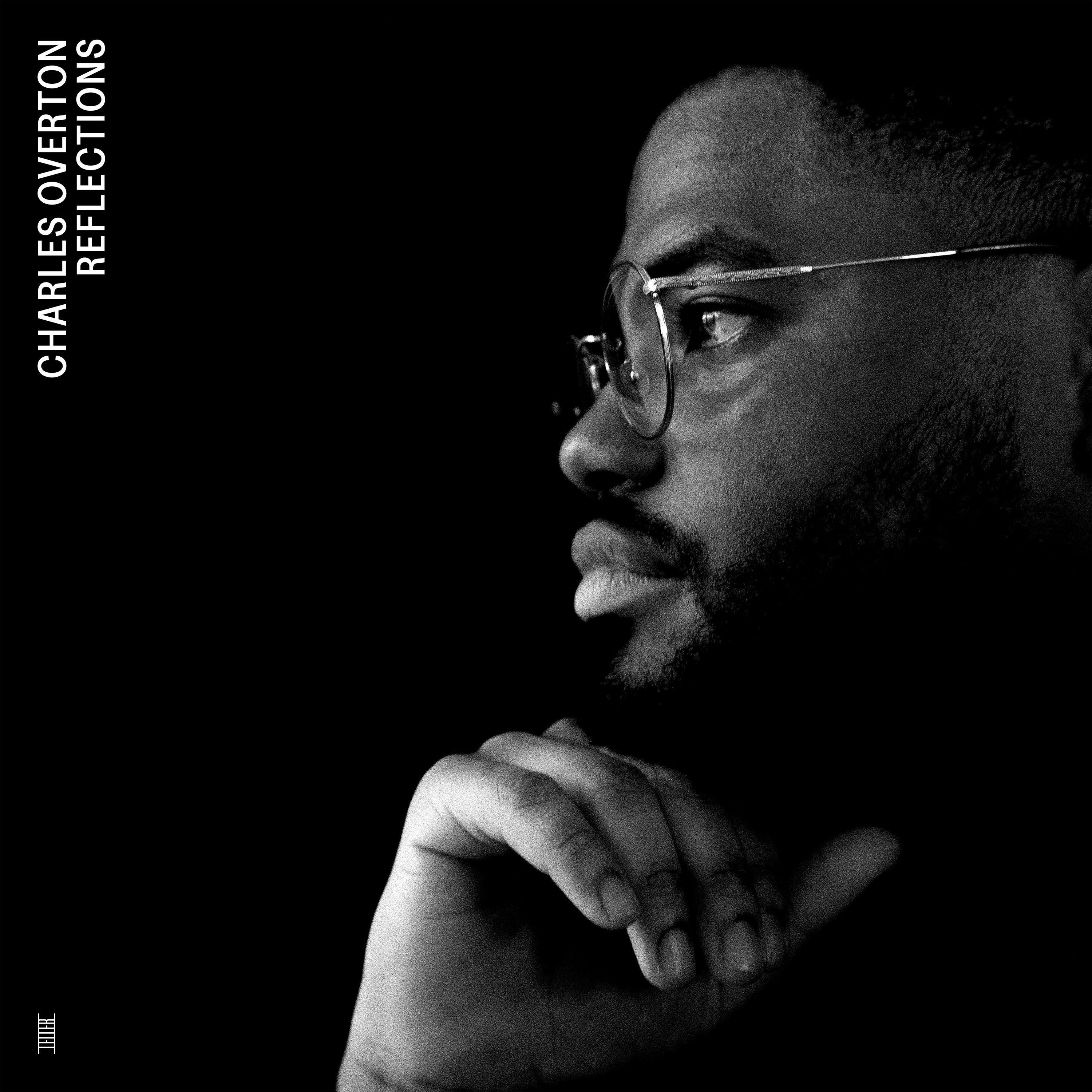
Boston-based harpist and composer Charles Overton has announced his debut EP on LEITER. A musician who has performed and studied alongside artists such as Shabaka Hutchings, Danilo Pérez, ganavya and with the Boston Symphony Orchestra, and graced the stages of Newport Jazz, North Sea Jazz, and Montreux, Overton has long been one of the most distinctive presences in rooms not his own. ‘Reflections’ marks his first full statement as a leader, out now via all digital platforms.
Charles Overton didn’t intend to make an album. For years, the harpist and composer had built a reputation as a compelling voice in contemporary creative music, lending his gifts to the work of others while quietly shaping a singular artistic language of his own. Audiences knew him as a collaborator and sideman, a musician capable of bringing warmth, texture, and startling imagination to nearly any ensemble. But somewhere along the way, amid touring schedules, teaching responsibilities, and the demands of professional musicianship, the space required to fully explore his own voice had become increasingly difficult to find.
Then came an unexpected invitation. While touring with the acclaimed devotional singer ganavya, Overton found himself encouraged by the LEITER team and invited to Saal 3 at Funkhaus Berlin to spend time in the room and simply create. What initially felt like a casual opportunity — a day in the studio, perhaps a few rough demos — quickly evolved into something far more profound. “The sound in that studio is really special,” Overton says. “I was uniquely inspired in a way I hadn’t really been before in a studio environment.”
What emerged from those sessions would become ‘Reflections’, an intimate and deeply revealing debut EP recorded across five days between July and November 2025. More than a collection of compositions, the project serves as a document of self-discovery — a meditation on hope, healing, and the often complicated act of listening to oneself.
Unlike some composers who approach the page with a fully-formed concept, Overton often starts from a place of uncertainty: a question or an emotional knot that words can’t quite untangle. “I usually have a feeling that I can’t articulate,” he explains. “Then I go play. Eventually the music tells me what it’s about.” The opening track, ‘Tomorrow,’ captures that philosophy in its purest form. Recorded in a single take during Overton’s first day at Funkhaus, the piece is entirely improvised. Yet within its gentle arcs and searching melodic contours lies an unmistakable epicenter. At the time, Overton found himself grappling with questions about optimism in an increasingly uncertain world. “I was thinking a lot about what it means to have hope,” he says, “in a world that makes it kind of radical to have hope.” The result is music that doesn’t offer easy answers. Instead, it dwells in life’s corners, with lingering notes and stretched harmonies that punctuate the sound. ‘Tomorrow’ isn’t just a cool composition on a fascinating album; it’s witnessing a kind soul thinking aloud.
For Overton, the pandemic marked a turning point in his relationship with the harp. Like countless musicians, he experienced an abrupt interruption of routine in which concerts disappeared and stages fell silent. The familiar rhythms of artistic life dissolved overnight. Then one day, sitting alone with an untuned instrument, he began to play. What followed surprised him. “I felt such a strong emotional response,” he recalls. The experience reshaped his understanding of the harp, and his place within it.
For much of his career, Overton had resisted the instrument’s traditional associations. Harps are frequently praised for beauty, elegance, and serenity. Though the instrument can surely be described as soothing or delicate, he wanted to push against those perceptions, eager to demonstrate the harp’s virtuosity, complexity, and power. Today, his perspective has evolved. Rather than rebutting the harp’s capacity for healing, he embraces it. “There’s actually something deep and important about those qualities,” he says. “Music really does serve a purpose. It reaches people in ways words can’t.” That revelation informs every moment of ‘Reflections’. The EP doesn’t seek to overwhelm listeners with technical prowess, though Overton’s remarkable facility is evident throughout. Instead, it invites presence and unity.
That’s apparent on ‘Dawn,’ one of the project’s centerpieces. Built around a motif originally composed during the pandemic for an online meditation series, the piece unfolds like its namesake. What begins as a sparse, contemplative figure gradually expands into something luminous. Layer by layer, warmth enters the frame until the music seems to radiate from within. Overton remembers associating the original melody with images of sunrise. “I wanted it to feel like the warmth of the sun hitting your body,” he says. In the studio, an impromptu jam session with drummer Hiromu Seifert revealed the composition’s missing piece. Suddenly, the music had a horizon line. A moment when darkness gives way to light.
The piece embodies a broader theme that runs throughout ‘Reflections’: the belief that growth rarely arrives all at once. It emerges gradually, often imperceptibly, until one day the world appears illuminated in a way it hadn’t before. That idea carries particular weight given Overton’s place within a growing lineage of Black harpists who are actively redefining public perceptions of the instrument. Though pioneers like Dorothy Ashby and Alice Coltrane established powerful precedents decades ago, the harp remains largely disassociated from popular understandings of Black musical traditions.
Overton‘s approach is neither academic nor nostalgic. Instead, it draws directly from lived experience. Raised in the Baptist church, he absorbed gospel music long before he developed his own artistic voice. Those sounds — the directness, the communal spirit, the sense of transcendence — continue to shape his musical instincts. “I want the people my mom goes to church with to connect with this music,” he says. “I want my aunties to love it.” It’s a deceptively simple statement, but one that reveals much about Overton’s artistic philosophy. Accessibility, in his view, is not the opposite of complexity. The most meaningful music often speaks to both the head and the heart simultaneously. On ‘Reflections’, Overton pushes the harp toward new sonic possibilities: Certain passages evoke the attack of a piano; others suggest the elasticity of a guitar. Yet no matter how far he stretches the instrument’s range, he never loses sight of its core.
Ultimately, ‘Reflections’ arrives as a portrait of an artist learning to trust himself. It’s also an attempt to reconcile aspiration with reality, for those who need it to accept the gap between who they are and who they hope to become. These songs are invitations to look inward and sit with ambiguity, to acknowledge discomfort without allowing it to define us. The result is a debut that feels assured despite its origins in uncertainty. Or perhaps because of it.
With ‘Reflections’, Overton offers something increasingly rare: music that asks us to encounter ourselves more fully. It is a record rooted in listening — to sound, to emotion, and the inner voice that tells us to keep going. And in a world that rarely slows down long enough to hear what lies beneath the surface, that may be its greatest gift.